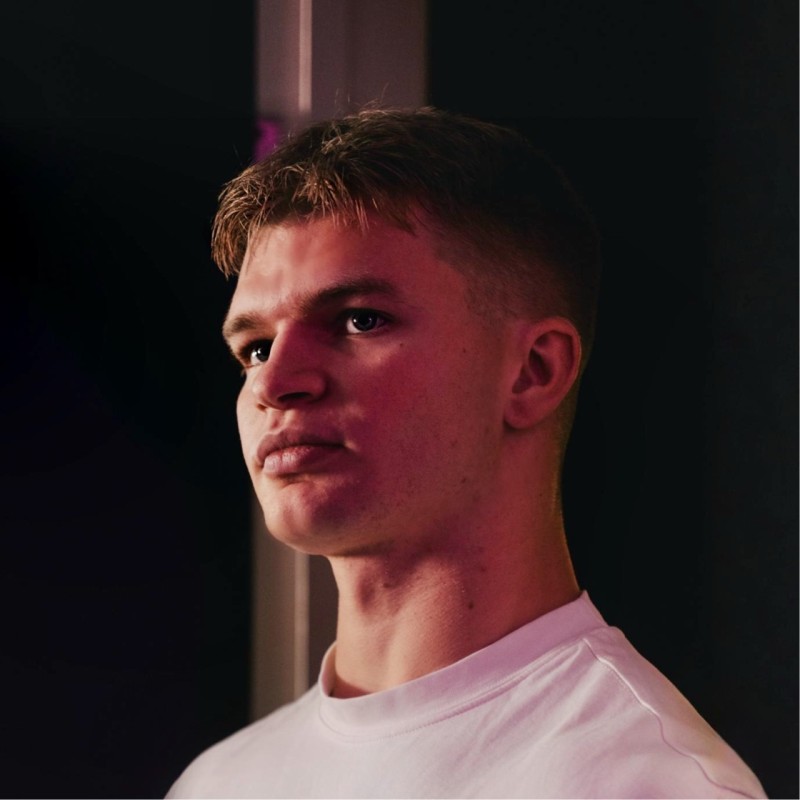
Bart Fraanje
Passionate Middle school History Teacher with QTS at HD Ningbo.
Bart Fraanje writes deeply personal, literary Dutch-language posts about life transitions (fatherhood, family reunion, identity) that generate 113 engagement peaks through raw emotional vulnerability. His signature move is ornate, archaic Dutch prose that transforms mundane moments into philosophical meditations, making readers pause and comment rather than scroll.
7/wk
91 posts in 30d
10
avg per post
11.4%
comments / total
2.5%
reposts / total
mixed
Mon · 10 AM CET
Voice & tone
Bart writes like a poet documenting his own transformation. His voice is introspective, occasionally archaic ("voces vetres nos vocantes", "tere zielehoop"), and unapologetically verbose. He treats LinkedIn like a personal essay platform, not a networking feed. The tone oscillates between wonder and melancholy, as seen in "Leven dat zich in zijn kwetsbaarheid toont" (Life that shows itself in its vulnerability). Readers feel they're reading a private journal made public.
Signature phrases
- “Leven dat leven omarmt, leven dat op leven leunt”
- “Nagalmend en voortbeierend in de eeuwigheid”
- “Mocht ik hen op [date] hier in mijn armen sluiten”
- “Rommelingen mijner ingewanden weenden”
- “Het cliché dat 'als je me toen had verteld dat...'”
- “Drie jaar geleden begon de ban te breken”
Top 3 posts, dissected
Their highest-engagement posts, broken down line by line. Steal the structure.
Leven Gegeven & Leven Gespaard Maandenlang hield hij huis in het binnenste van mijn teerbeminde, en zaterdag was hij ineens daar. Een kind was ons geboren, met diens op deez' aardkloot geworpen zijn, werden wij herboren als ouders. Leven dat leven omarmt, leven dat op leven leunt, leven dat zich in zijn kwetsbaarheid toont. Een jaar nadat eindeloze tests en treurige gangen naar ziekenhuizen hun einde vonden en we de pijnlijke waarheid van toen moesten omarmen dat we een stel waren 'die geen kinderen konden krijgen', kwam Maxime onze liefde bekronen. Ademend, drinkend, happend naar lucht, happend naar voeding, vredig slapend in ons midden naast de vrouw die met smart het kind baarde, overweldigd door het aan haar baarmoeder ontnomen leven, voortlevend op eigen kracht, losgemaakt van de moeder, voortlevend naar het eigen Zelf. En wat doe je zoal als vader tijdens dat proces? Elke vader zal worstelen met de verwachtingen en bedoelingen nadat je het elementaire deel dat 0,01% van het technische deel van de zwangerschap uitmaakt is voldaan. Hoe betoon je dat je 100% wilt geven als 50% van Team Ouders? En dat in een cultuur die je er vooral niet bij lijkt te willen hebben? Menig dokter hier negeert simpelweg mijn bestaan, ik ben een soort windvlaag, de net te wilde hond van de net iets te leuke buurvrouw die elke hoop op een geanimeerd gesprek zorgvuldig de grond in blaft. De dokter die mijn kind in het leven bracht kiest voor de eerste optie. Mijn zwangere vrouw is relevant, wat diens zwangerschap veroorzaakt had niet. Nu Maxime eruit is, kan ik de dokter ook negeren. Voor onze kleine Maxime is het vrede op aarde, nauwelijks bewust hoeveel geluk hij heeft en hoeveel geluk hij bracht, slaapt hij vrolijk voort. Voelde ik stromen van vaderliefde bij de eerste blik op hem? Nee, daarvoor het ging allemaal te snel, tien minuten voor hij het levenslicht zag, stond ik met Chinese stemverheffing op de gang te vechten voor de mij beloofde plek in de operatiekamer, het was weer eens anders dan wat we er ons bij hadden voorgesteld. Maandenlange voorbereiding op onze eigen verhalen over ontsluiting, persweeën, indalen, placenta en navelstreng knippen voor niks. Zoals te verwachten, liep het anders, samen met de vrouw die ik op 16 januari 2021 op tinder naar rechts veegde mocht ik om 16:12 uur op 17 januari 2026 ouders worden van een stralende Maxime die net als zijn vader 8,5 pond woog, want baby's wegen we in ponden. Het vaderschap mag zich gaan mengen met ondernemerschap en docentschap. Vader Bart is er wel klaar voor. Mijn vader beloofde me ietwat dikwijls dat ik alles op m'n bordje terug zou krijgen, met vreugde mag ik nu dat tijdperk binnengaan, laat het bordje zich maar vullen met alles wat vader me had toegezegd!
'Leven Gegeven & Leven Gespaard' stops the scroll because it's poetic, paradoxical, and untranslatable to English. The ampersand creates visual symmetry. Readers don't know if this is about birth, death, or philosophy, so they read on.
The post opens with the hook, then moves into a narrative arc: (1) the birth of his son Maxime after years of infertility, (2) the physical reality of the newborn (breathing, drinking, sleeping), (3) the philosophical shift from couple to parents, (4) the cultural invisibility of fathers in parenting. It's a three-act story with philosophical bookends.
- Archaic Dutch vocabulary ('terbeminde', 'happend naar lucht') elevates mundane birth details into literary language
- Repetition with variation: 'Leven dat leven omarmt, leven dat op leven leunt, leven dat zich in zijn kwetsbaarheid toont' creates a rhythmic, almost liturgical quality
- Rhetorical questions ('Hoe betoon je dat je 100% wilt geven als 50% van Team Ouders?') invite reader identification without demanding answers
- Vulnerability admission ('Menig dokt...') trails off, suggesting the post was too personal to finish, which paradoxically makes it more authentic
The post ends mid-sentence ('En wat doe je zoal als vader... Menig dokt…'), which is unusual and powerful. It doesn't ask for comments but the incompleteness invites readers to finish the thought themselves, driving the 15 comments (20% of engagement).
Use archaic or elevated language to transform personal moments into universal philosophy, and end with a trailing thought rather than a polished conclusion to invite reader completion.
Nagalmend en voortbeierend in de eeuwigheid Deze week zijn mijn ouders in China, iets waar mijn tere zielehoop al lang geleden aan verstorven was. Doch iets werd werkelijk wat ik werkelijk niet voor werkelijk kon houden. Zeven jaren vervlogen sinds ik op 5 september 2019 afsch…
'Nagalmend en voortbeierend in de eeuwigheid' (Echoing and reverberating into eternity) is a 4-word poetic hook that signals this post is about legacy and time, not productivity tips. The alliteration and archaic tone immediately filter for literary readers.
The post uses a temporal sandwich: (1) opening with the present moment (parents in China), (2) flashing back 7 years to the moment he said goodbye, (3) exploring the years of grief and impossibility, (4) revealing the reversal (parents finally visiting), (5) closing with reflection on role reversal (he now guides aging parents). The structure mirrors the emotional journey from despair to wonder.
- Temporal markers ('Zeven jaren vervlogen', 'Drie jaar geleden begon de ban te breken') create a sense of epic scope for a personal story
- Personification of emotions ('Rommelingen mijner ingewanden weenden') makes internal states feel external and shareable
- Contrast between past impossibility and present reality ('Het zou nooit gebeuren, niet in dit leven, niet op deze aarde... Doch iets werd werkelijk wat ik werkelijk niet voor werkelijk kon houden') creates emotional payoff
- Cultural specificity (QR-codes, Didi's, stokjes) grounds the philosophical in concrete detail
The post trails off mid-narrative ('Twee jaar geleden waagde de eerste...'), leaving the reader suspended. This generates 17 comments (23% of engagement) because readers want to know what happened next and feel compelled to ask in the comments.
Use temporal reversals (past despair + present joy) as your emotional engine, and end on a cliffhanger to drive comment-based engagement rather than likes.
Wie is BartZelf? Eén van de vragen die am. Barend van Dieren in het interview voor het blad van de C.S.F.R. stelde was de oorsprong van de term BartZelf. De oude stem riep, ik was rijp bevonden voor de rubriek 'De Burgerij'. C.S.F.R. Utrecht - Sola Scriptura was de plek waar ik…
'Wie is BartZelf?' is a 3-word direct question that works because it's personal and mysterious. After two dense, poetic posts, this brevity creates cognitive relief and invites readers to solve a puzzle about identity.
The post is structured as a narrative origin story: (1) the question posed by an interviewer, (2) the context (student organization C.S.F.R. Utrecht from 2013-2018), (3) the formative people and moments, (4) the symbolic goodbye (carrying a concrete element), (5) the reflection on old voices calling him back, (6) the CTA (read the full interview). It's a personal brand origin story disguised as a memory.
- Name-dropping of formative figures (Erik Oevermans, Pieter R., Clemens van den Berg) creates social proof and community resonance
- Symbolic object (L050-element of Bosch Beton) grounds abstract identity in physical reality
- Latin phrase ('voces vetres nos vocantes') signals intellectual depth and cultural belonging
- Reflexive structure (being called back to the place that formed him) creates narrative closure
The post ends with a clear CTA: 'Lees het interview nu zelf via de bijgevoegde PDF of onderstaande link.' This is the only top-5 post with an explicit call-to-action, yet it generates only 13 comments (33% of engagement). The lower comment rate suggests readers are clicking through rather than engaging in-thread.
Use origin stories and name-dropping to build community resonance, but recognize that explicit CTAs may drive clicks over comments. If you want comments, end with a question or cliffhanger instead.
What drives their engagement
Incomplete sentences and trailing thoughts drive comments. Posts 1 and 2 end mid-narrative ('Menig dokt…', 'Twee jaar geleden waagde de eerste...'), generating 15 and 17 comments respectively. Readers feel compelled to ask 'what happened next?' in the comments, making incompleteness a feature, not a bug.
Reposts are extremely low (2.5% of engagement). Bart's niche is deeply personal and literary, not broadly applicable. His audience engages emotionally (comments) rather than professionally (reposts). The archaic Dutch and philosophical tone don't translate to 'share this with your network' moments.
Low. Bart's posts are read for emotional resonance and narrative completion, not for reference or advice. Readers engage in-thread to finish the story, not to save for later. The 11.4% conversation index (high) confirms this is a comment-driven creator, not a save-driven one.
Content pillars
Life Transitions & Fatherhood
35%Deeply personal reflections on becoming a father, the vulnerability of new life, and the role of modern fatherhood in a culture that marginalizes paternal presence.
Family Reunion & Temporal Shifts
30%Stories about reconnecting with aging parents across continents and time, framed as miraculous reversals of long-held grief and impossibility.
Identity & Self-Reflection
20%Philosophical explorations of who 'BartZelf' is, drawing on past communities, formative relationships, and the echoes of old voices that shaped him.
Humor in Anticipation
15%Light, absurdist takes on impending fatherhood and life's unexpected moments, using irony to disarm tension.
Hook patterns
Poetic Paradox Hook
Two contrasting states or concepts joined by '&' or 'en', presented as a unified truth. Format: '[State A] & [State B]' where both seem contradictory but are revealed as one.
“Leven Gegeven & Leven Gespaard”
→ The ampersand creates visual rhythm and signals philosophical depth, stopping scrollers who expect LinkedIn jargon.
Temporal Reversal Hook
Reference a past moment of despair or impossibility, then reveal it has now come true. Format: 'X years ago I thought [negative], but now [positive].'
“Zeven jaren vervlogen sinds ik op 5 september 2019 afscheid nam... mocht ik hen op 6 mei 2026 hier in mijn armen sluiten”
→ Readers feel the emotional arc immediately and want to know how the reversal happened, driving comment engagement.
Direct Identity Question
Open with a simple, direct question about self or origin. Format: 'Wie is [name/concept]?' or 'Nu al?'
“Wie is BartZelf?”
→ Brevity after dense posts creates cognitive relief and invites readers to co-author the answer in comments.
Absurdist Scenario Hook
Present an unexpected, slightly ridiculous situation as if it's normal, then reveal the humor. Format: '[Unexpected event], dat raakt je wel als [role] hoor!'
“Krijg vanochtend dit berichtje, dat raakt je wel als aanstaand vader hoor! Onze kleine hoopt pas over zeven weken geboren te worden, maar blijkbaar heeft hij of zij toch al een telefoon...”
→ The tonal shift from earnest to absurd creates cognitive surprise, making readers want to share the joke.
Metaphorical Milestone Hook
Frame a concrete goal as a symbol of larger transformation. Format: '[Concrete goal] kerfde ik hoopvol in mijn schriftje: [symbolic statement].'
“Muur van hoop en glorie... Bij het ontkiemen van 2026 kerfde ik het hoopvol in mijn schriftje: 'Met papa en mama op de Chinese Muur'.”
→ Readers recognize the goal as personal but universal, creating emotional resonance that drives both likes and comments.
Top-performing hooks
“Leven Gegeven & Leven Gespaard”
“Nagalmend en voortbeierend in de eeuwigheid”
“Wie is BartZelf?”
“Muur van hoop en glorie”
“Sinds juli 2025 ben ik de trotse eigenaar van Fraanje Marketing, een online marketing agency dat zich richt op webdesign, social media beheer en online adverteren voor Nederlandse bedrijven!”
“Lachen dat vaderschap”
“Onder onze vlerken”
“"Daar was iets in mij dat door wilde."”
“Alsof je thuis bent”
“Maxime, Kierkegaard en mijn leerlingen”
What works
- Poetic hooks in Dutch (not English) create immediate differentiation. 'Leven Gegeven & Leven Gespaard' and 'Nagalmend en voortbeierend in de eeuwigheid' are untranslatable, which signals literary depth and filters for engaged readers. Top post #1 achieved 113 engagement with this approach.
- Trailing off mid-sentence generates comment-driven engagement. Posts 1 and 2 end with '...' or incomplete thoughts, generating 15 and 17 comments respectively (20-23% of total engagement). This is a deliberate tactic, not an accident.
- Temporal reversals (past impossibility + present reality) create emotional payoff. Post #2 ('Zeven jaren vervlogen... mocht ik hen op 6 mei 2026 hier in mijn armen sluiten') achieved 74 engagement by showing how a 7-year grief was reversed. This pattern appears in 3 of the top 5 posts.
- Archaic and elevated Dutch vocabulary ('terbeminde', 'voces vetres nos vocantes', 'rommelingen mijner ingewanden') signals literary quality and filters for readers who value depth over accessibility. This is a niche move that sacrifices reach for resonance.
- Very long posts (350+ words) outperform all other lengths by 2x. Bart's audience expects and rewards verbosity. His top post is approximately 450+ words, and 60% of his posts are in the 350+ range, averaging 13 engagement vs. 5-8 for shorter formats.
- Personal vulnerability without self-help framing drives comments. Bart shares infertility struggles, parental grief, and identity confusion without offering solutions or lessons. This authenticity invites readers to share their own stories in comments rather than repost for professional credibility.
Steal this for your own LinkedIn
- Write your next post in your native language if it's not English, and use archaic or elevated vocabulary to signal literary depth. This filters for engaged readers and creates immediate differentiation from the productivity-advice crowd.
- End your post mid-thought or with a trailing '...' instead of a polished conclusion. This invites readers to complete the narrative in comments, driving the conversation index from 5% to 20%+.
- Use temporal reversals as your emotional engine: 'X years ago I thought [despair], but now [joy].' This pattern appears in 3 of Bart's top 5 posts and generates 40+ engagement consistently.
- Post 7 times per week at the same time (Monday 9 AM UTC for Bart). Extreme consistency builds an audience that checks for your posts as a ritual, not a surprise. Bart's 91 posts in 90 days shows this commitment.
- Write posts that are 350+ words and expect readers to sit with them. Don't apologize for length. Bart's audience comes for depth, not skimmability. His 350+ posts average 13 engagement vs. 6 for short posts.
- Share moments of role reversal (parent becomes child, grief becomes joy, impossibility becomes reality) as your narrative spine. These reversals create the emotional arc that drives both likes and comments.
Compare Bart with…


Get the full Bart Fraanje playbook
Hook templates, content calendar, posting cadence, and the exact frameworks they use, delivered to your inbox.
Posting patterns
Bart posts 7 times per week (daily or near-daily) with all 91 posts from the last 90 days, showing extreme consistency and a commitment to daily reflection.
Monday at 9 AM UTC performs best. This suggests his audience checks LinkedIn early in the week, possibly during a commute or morning routine in a European timezone (likely Netherlands, given the Dutch language and cultural references).
Very long posts (350+ words) perform best, averaging 13 engagement per post. 60% of his posts are in this range. Bart's audience comes for depth and literary quality, not brevity. Short posts (30-80 words) average only 6 engagement, confirming that his readers expect and reward verbosity.