Brad Ziemer vs Mark A. Pfister: Luxury Mood vs Program Celebration
Brad Ziemer builds authority through ultra-short sensory storytelling (95% under 30 words) in a niche market with 5.5K followers and 2% avg engagement. Mark A. Pfister scales reach through graduate spotlights and program promotion (13.5K followers, 20% avg engagement, 15.4 posts/week). They represent two opposite paths: depth-first brand positioning versus volume-first community building.
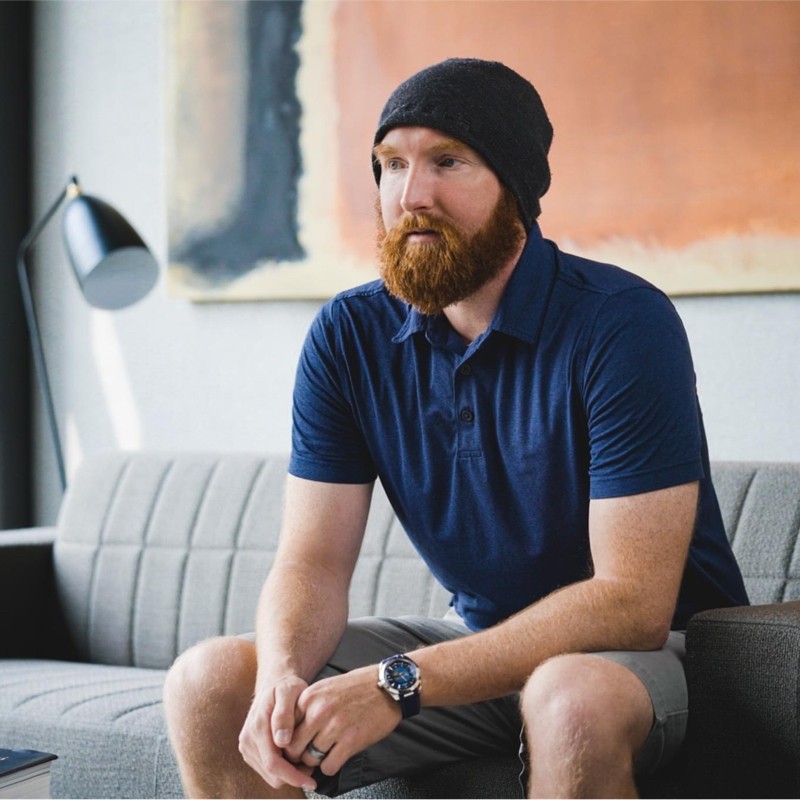
Brad Ziemer
Founder & Operator | 3× Inc. 5000 Entrepreneur | Acquiring & scaling real estate media companies across the US | Passionate about helping real estate pros market, sell & scale with media.

Mark A. Pfister - 'The Board Architect'
Non-Executive Director | Board Director | CEO | Chief Board Consultant | Corporate Strategist | Board Macro-Influencer | Speaker | Author | IBDC.D
- Brad: Poetic, sparse, niche authority. Mark: Celebratory, frequent, program-driven growth.
- Brad's 2% engagement is quality-over-reach; Mark's 20% engagement scales through repetition.
- Brad owns mood and lifestyle narrative. Mark owns graduate success narrative.
- Brad posts 4.5x/week. Mark posts 15.4x/week with 15.5% repost rate.
Side by side
| Dimension | Brad Ziemer | Mark A. Pfister - 'The Board Architect' |
|---|---|---|
| Voice | Calm, observational, poetic—writes like a luxury lifestyle editor reflecting back the reader's existing taste and money. | Celebratory and authoritative—positions himself as champion of board directors, using 'Nice job' and 'truly an asset' repeatedly. |
| Content mix | 100% atmospheric property showcases and location storytelling; zero program promotion or self-referential content. | 70% graduate spotlights (with testimonials), 20% program promotion, 10% board insights and industry news. |
| Hook style | Sensory questions ('WHAT DOES PRIVATE ISLAND LIVING FEEL LIKE?') and contrarian mood statements ('doesn't feel like Miami at all'). | Congratulatory intros ('Congratulations to [Name] having earned...') followed by direct praise and benefit statements. |
| Engagement pattern | 2% avg engagement per post; top hook earned 10 engagements; conversation index 13.3%; zero reposts. | 20% avg engagement per post; top hook earned 113 engagements; conversation index 14.5%; 15.5% repost rate. |
| Posting cadence | 4.5 posts/week; best day Wednesday; 58 posts analyzed suggests 3-month window. | 15.4 posts/week; best day Friday; 200 posts analyzed suggests consistent high-volume strategy. |
Who wins what
13.5K followers vs 5.5K; 15.4 posts/week compounds visibility; top post hit 113 engagements vs Brad's 10.
14.5% conversation index vs 13.3%; graduate spotlights create reply-able moments ('Be sure to connect with [Name]').
Sensory descriptions and lifestyle narratives are reference-worthy; Mark's congratulatory posts have zero repost rate vs Brad's zero-but-intentional curation.
200 posts analyzed shows disciplined repetition; same hook structure (congratulations + praise + CTA) works at scale; Brad's 58 posts suggest slower, more editorial approach.
Pick Brad Ziemer if…- You sell luxury lifestyle products and want to own mood/positioning over transaction volume; Brad's sensory-first approach builds brand authority in high-ticket niches.
- You're building a personal brand in a visual or emotional category (design, real estate, hospitality); his 'doesn't feel like Miami' contrarian positioning creates distance from competitors.
- You value quality conversation over follower count; Brad's 13.3% conversation index suggests his 5.5K followers are deeply engaged with his POV, not just collecting credentials.
- Sensory-first hooks: Open with 'WHAT DOES [lifestyle] FEEL LIKE?' or a contrarian mood statement ('doesn't feel like X at all') instead of features or benefits; Brad's top hook earned 10 engagements with pure emotional positioning.
- Ultra-short posts (95% under 30 words): Trim every sentence to one image and one feeling; Brad's brevity forces clarity and makes each post feel like a curated editorial moment, not a sales pitch.
- Location + emotion pairing: Name the place, then name the feeling ('GOLDEN BEACH' + calm energy); this creates a branded association that readers can reference and share without needing product details.
Pick Mark A. Pfister - 'The Board Architect' if…- You run an education or certification program and need to drive enrollment; Mark's graduate spotlights create social proof at scale and turn customers into marketing assets.
- You want to post frequently without burning out; Mark's repeatable congratulatory template (same structure, swap names) allows 15.4 posts/week with minimal creative friction.
- You're building a community around a designation or credential; his 'Be sure to connect with [Name]' CTA turns each post into a networking node that compounds reach.
- Graduate/customer spotlights as content engine: Name the person, celebrate the credential, add a testimonial, and tag them in a CTA; Mark's top post hit 113 engagements by turning one customer into a mini-story with social proof baked in.
- Repeatable template for high-volume posting: Use the same hook structure (Congratulations + [Designation] + Nice job + Benefit statement + Connect CTA) and swap names/details; this allows 15.4 posts/week without creative burnout.
- Tag-and-nominate mechanic: 'Be sure to connect with [Name] - she is definitely a Director to watch' turns each post into a networking recommendation; readers engage to see who's being highlighted, creating a virtuous cycle.
Brad and Mark represent two opposite LinkedIn strategies that both work, but for different goals. Brad is playing the luxury positioning game: fewer posts, higher craft, zero reposts, building a brand that feels editorial and exclusive. Mark is playing the community-and-program game: high volume, repeatable templates, customer spotlights as fuel, turning his audience into his marketing team. Brad wins if you want to own a niche and charge premium prices. Mark wins if you want to scale reach and convert volume. The meta-lesson: decide first whether you're building a brand (Brad's path) or a business (Mark's path). Then choose your cadence, hook style, and content mix accordingly. Mixing them—posting sporadically with sensory language but also running program CTAs—dilutes both.
More comparisons featuring Brad Ziemer or Mark A. Pfister - 'The Board Architect'
 VS
VSChris Do vs Mark A. Pfister: Mass Appeal vs Niche Authority on LinkedIn
 VS
VSLea Turner vs Mark Pfister: Vulnerability beats credentials on LinkedIn
 VS
VSJay Clouse vs Mark A. Pfister: Mass appeal beats niche authority on LinkedIn
VS
Mark A. Pfister vs Mark Tweed: Celebration vs Vulnerability on LinkedIn
 VS
VSHana Jacover vs Mark Pfister: Volume beats consistency on LinkedIn growth
VSBrad Ziemer vs Hana Jacover: Niche depth beats posting volume on LinkedIn