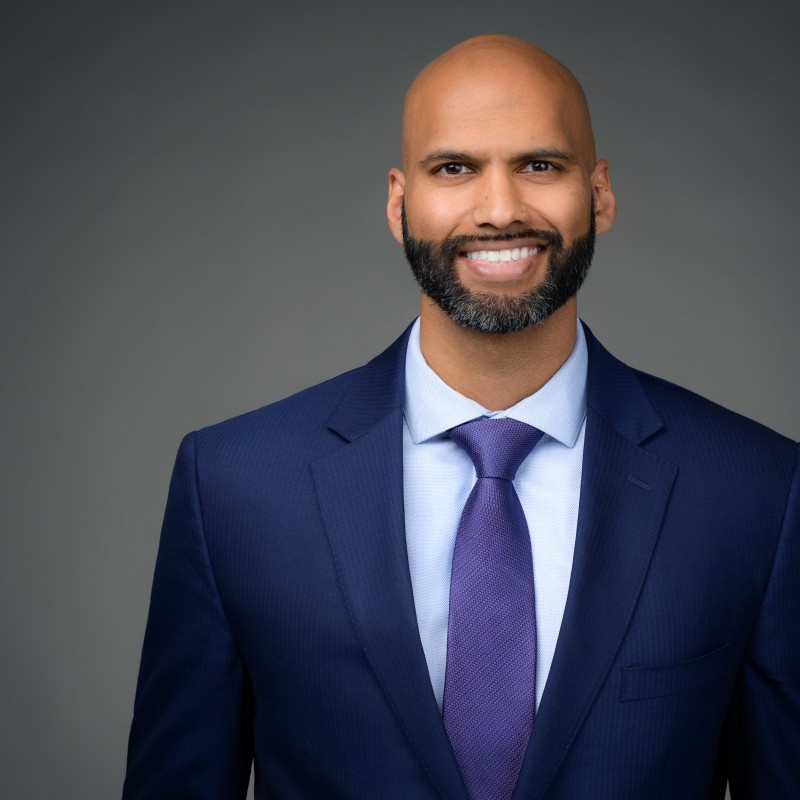
Rajiv Rebello
Helping HNW families and their advisors create tax-efficient investment, estate, and retirement strategies
Rajiv Rebello teaches ultra-high-net-worth families how to structure wealth through tax-efficient vehicles (annuities, PPLI, guaranteed income products) by flipping conventional wisdom on its head. His most distinctive move is leading with a contrarian claim that reframes a 'boring' financial product as secretly powerful, then backing it with specific numbers (payout rates, IRR percentages, dollar amounts) that prove the counterintuition.
5.2/wk
67 posts in 30d
3
avg per post
14.7%
comments / total
2.7%
reposts / total
problem-solution with analogy
Mon · 4 PM CET
Voice & tone
Rajiv writes like a skeptical insider who has seen the math others missed. He's conversational but precise, often starting with what 'most people think' before demolishing that assumption with data. His tone is confident without arrogance—phrases like 'But the numbers tell a very different story' and 'Don't believe me?' invite readers into a discovery rather than lecturing them. He assumes his audience is intelligent and wants proof, not platitudes.
Signature phrases
- “Most people think of [X] as [conventional belief]. But the numbers tell a very different story.”
- “Here are the [number] key differences that make [product] a legitimate [comparison]”
- “The business model is completely different.”
- “But here's the catch:”
- “Where else can you get [specific metric] from [asset class] with [benefit]?”
- “You are mathematically better off [doing X] than you are [doing Y].”
Top 3 posts, dissected
Their highest-engagement posts, broken down line by line. Steal the structure.
Private Placement Life Insurance isn't your typical life insurance. Most VUL policies? Overpriced, limited investment options, and poorly suited for wealthy investors. PPLI flips the script entirely. Here are the 3 key differences that make PPLI a legitimate "Super Roth" for clients with $15M+ net worth: → Access to private funds (Millennium, Blackstone, Ares, Goldman Sachs) with $250K-$1M minimums → Choose your own investment advisor to manage the assets → Costs of 0.5-1% vs 1.2-1.5% for traditional policies The business model is completely different. Traditional policies: small premiums, huge upfront commissions (80-100% of first year premium), higher ongoing costs PPLI: large premiums ($5M+), no massive upfront commissions, AUM-based fee structure The result? You're investing tax-inefficient, high-growth assets (private credit, hedge funds, PE) inside a tax-free wrapper at a fraction of traditional costs. But here's the catch: not everyone should use PPLI. In my article, I outline the 7 criteria you must meet to make PPLI work effectively. Read the complete article: link in the comments. #PPLI #PrivateWealth #InvestmentStrategy
The hook 'Private Placement Life Insurance isn't your typical life insurance' immediately signals a reframe. It's not a question or statistic—it's a direct contradiction of category expectations. This stops the scroll because readers think they know what PPLI is, and the creator is saying they're wrong.
The post uses a three-part architecture: (1) Problem statement (traditional VUL policies are overpriced), (2) Reframe (PPLI flips the script), (3) Three numbered benefits with specific metrics (access to private funds, advisor choice, cost comparison 0.5-1% vs 1.2-1.5%). Then it pivots to business model comparison (traditional vs PPLI commission structure), then outcome (tax-free wrapper for high-growth assets), then a catch (not everyone should use it), then CTA (read full article with 7 criteria).
- Specificity through naming—Millennium, Blackstone, Ares, Goldman Sachs make the opportunity feel real and exclusive
- Comparison with percentages—0.5-1% vs 1.2-1.5% makes the cost arbitrage immediately visible
- Reversal of business model logic—showing how PPLI's large premiums and AUM fees are actually better than traditional small premiums with huge commissions
- Gating the full answer—'7 criteria you must meet' creates curiosity and drives clicks to the article
The CTA is indirect but powerful: 'In my article, I outline the 7 criteria you must meet to make PPLI work effectively. Read the complete article: link in the comments.' This drives engagement because readers must comment or click to get the full answer, and the mention of '7 criteria' signals there's a framework worth learning.
Lead with a category contradiction (not a question), back it with 3-4 specific metrics that prove the contradiction, then gate the deeper framework to drive clicks and comments.
Most people think of annuities as low-return products. But the numbers tell a very different story. A $1M premium into the right annuity with a guaranteed lifetime income benefit — can deliver the following: ✅ $131,964/year in guaranteed income (13.2% payout rate) ✅ 7.06% pre-t…
The hook 'Most people think of annuities as low-return products. But the numbers tell a very different story' uses the contrarian reframe pattern but with a softer entry. It acknowledges the reader's existing belief (annuities = boring) before demolishing it with data. The phrase 'the numbers tell a very different story' is a signature move that appears in multiple top posts.
The post follows a data-first architecture: (1) Hook with belief reversal, (2) Specific dollar amount ($1M premium), (3) Four stacked metrics with checkmarks (guaranteed income, payout rate, pre-tax IRR, after-tax IRR, total lifetime payments), (4) Social proof (backed by life insurance companies with billions in bonds), (5) Rhetorical question (Where else can you get 7% pre-tax IRR?), (6) CTA with specific date/time (March 18th, 12 PM PST / 3 PM EST) and webinar registration.
- Stacked metrics with checkmarks—creates visual rhythm and makes the numbers feel abundant rather than scattered
- Dual IRR presentation—pre-tax and after-tax shows sophistication and speaks to high-net-worth concerns
- Rhetorical question as proof—'Where else can you get a 7% expected pre-tax IRR?' is unanswerable, which makes the product feel unique
- Specific webinar date/time—removes friction by making the next step concrete and time-bound
The CTA is a webinar registration with a specific date, time, and timezone. This is stronger than a generic 'learn more' because it creates scarcity (specific date) and removes decision friction (exact time). The 21 engagements suggest this specificity drives action.
When presenting financial metrics, stack them vertically with visual markers (checkmarks), show both pre-tax and after-tax versions to signal sophistication, then end with a rhetorical question that proves your claim, followed by a specific, time-bound CTA.
Guaranteed lifetime income (GLI) vehicles allow clients the ability to invest in bonds with higher pre-tax returns, lower tax-liabilities, higher after-tax returns, and guarantees that they can’t get elsewhere. I’ve been writing about this for a while. But we’ve recently buil…
This hook is the longest of the top 5, functioning as a thesis statement rather than a teaser: 'Guaranteed lifetime income (GLI) vehicles allow clients the ability to invest in bonds with higher pre-tax returns, lower tax-liabilities, higher after-tax returns, and guarantees that they can't get elsewhere.' It's dense with benefits, which works here because the audience is ultra-high-net-worth and expects sophisticated language. The hook doesn't ask a question—it makes a declarative claim that feels like insider knowledge.
The post uses a proof-through-tools architecture: (1) Thesis statement (GLI vehicles are mathematically superior), (2) Credibility marker ('I've been writing about this for a while'), (3) New development (built online tools and calculators), (4) Restatement of thesis with stronger language ('You are mathematically better off'), (5) Skepticism invitation ('Don't believe me?'), (6) CTA with tool access (calculator in first comment). The structure is shorter than post 1 and 2, which may explain the lower engagement (16 vs 28 and 21), but the comment rate is high (5 comments), suggesting the calculator link drove discussion.
- Thesis-first approach—no buildup, just the claim, which signals confidence
- Credibility through iteration—'I've been writing about this for a while' shows this isn't a one-off idea
- Tool democratization—'built online tools and calculators so that people can put their own numbers in' removes the barrier to belief
- Skepticism inversion—'Don't believe me?' invites challenge, which paradoxically increases trust
The CTA is a calculator link in the comments. This is the lowest-friction CTA of the top 3 posts (no webinar signup, no article link), which may explain why engagement is moderate but comments are proportionally high—readers are asking for the calculator or discussing how to access it.
When you have a tool or calculator that proves your claim, lead with the thesis, acknowledge skepticism directly, then gate the tool in the comments to drive comment engagement and discussion.
What drives their engagement
Comments spike when Rajiv invites skepticism ('Don't believe me?'), gates a tool or calculator in the comments, or asks a rhetorical question that feels unanswerable. Post 3 has a 5-comment ratio despite lower total engagement, suggesting the calculator link drove discussion. Post 4 has 7 comments (highest ratio) because it presents a scenario (retire in 2000 vs 2003) that readers want to discuss or verify.
Reposts are low across the board (2.7% average), but the highest-repost posts are those with statistic shock hooks and clear frameworks. Post 1 (1 repost) and post 2 (2 reposts) both lead with specific metrics that feel shareable. Reposts likely come from advisors or wealth managers who want to share the data with clients.
High savability signal. Posts with specific metrics (payout rates, IRR percentages, dollar amounts) and frameworks (7 criteria, 3 key differences) are likely saved for reference. The mention of calculators and webinars also suggests readers are saving posts to return to them later. This creator optimizes for reach and reference value, not viral spread.
Content pillars
Product Repositioning (Annuities, PPLI, GLI)
42%Takes a misunderstood or 'boring' wealth vehicle and proves it's actually superior using specific returns, tax efficiency, and guarantees that traditional approaches can't match.
Timing and Sequence Risk
18%Shows how the timing of retirement, withdrawals, or market entry creates massive wealth divergence—using historical scenarios (dot-com crash) to prove why sequence matters more than people think.
Tax Strategy Frameworks
15%Teaches that optimizing one tax type often increases another, and walks readers through structured thinking for capital gains, income tax, and estate tax trade-offs.
Guaranteed Income Strategy
18%Positions guaranteed lifetime income as a cornerstone retirement tool, backed by calculators and webinars that let readers test the math themselves.
Investment Access and Cost Arbitrage
7%Highlights how ultra-high-net-worth clients can access private funds (Blackstone, Ares, Goldman) and reduce fees by 0.5-1% through structural changes.
Hook patterns
Contrarian Reframe
[Product name] isn't your typical [category]. [Conventional belief about it]. But [counterintuitive truth].
“Private Placement Life Insurance isn't your typical life insurance. Most VUL policies? Overpriced, limited investment options, and poorly suited for wealthy investors. PPLI flips the script entirely.”
→ Immediately signals the reader is about to learn something that contradicts what they've been told, creating curiosity and permission to keep reading.
Statistic Shock with Comparison
Most people think [X] is [low-value]. But [specific number/metric] tells a very different story.
“Most people think of annuities as low-return products. But the numbers tell a very different story. A $1M premium into the right annuity with a guaranteed lifetime income benefit can deliver: $131,964/year in guaranteed income (13.2% payout rate).”
→ Combines social proof (what most people believe) with a data shock that makes the reader want to see the math, driving engagement and shares.
Extreme Outcome Divergence
Want to know how [small variable] can be the difference between [catastrophic outcome] and [massive positive outcome]?
“Want to know how retiring 3 years too early can be the difference between running out of money and $5.7 million dollars?”
→ Creates emotional stakes (financial ruin vs. generational wealth) that make the post feel urgent and worth reading to the end.
Question Inversion
The obvious question is [X]. But the better question is [Y].
“A lot of tax strategies focus on 'saving taxes.' The better question is: Which tax are you actually trying to minimize?”
→ Positions the creator as someone who thinks deeper than surface-level advice, building credibility and making readers feel smarter for following.
Access/Opportunity Reveal
[Specific asset class or opportunity] with [specific minimum/requirement] allows clients to [specific benefit].
“Access to private funds (Millennium, Blackstone, Ares, Goldman Sachs) with $250K-$1M minimums. Choose your own investment advisor to manage the assets.”
→ Speaks directly to ultra-high-net-worth readers by naming specific funds and minimums, making the opportunity feel real and exclusive.
Challenge to Conventional Wisdom
Don't believe me? [Invitation to test/verify]. You are mathematically better off [X] than [Y].
“Don't believe me? Feel free to play with the calculator that I've linked in the first comment below. You are mathematically better off investing in bonds via a guaranteed lifetime income annuity than you are investing in bonds directly.”
→ Removes friction to belief by offering proof tools and inviting skepticism, which paradoxically increases trust and comment engagement.
Top-performing hooks
“Private Placement Life Insurance isn't your typical life insurance.”
“Most people think of annuities as low-return products. But the numbers tell a very different story.”
“Guaranteed lifetime income (GLI) vehicles allow clients the ability to invest in bonds with higher pre-tax returns, lower tax-liabilities, higher after-tax returns, and guarantees that they can’t get elsewhere.”
“Want to know how retiring 3 years too early can be the difference between running out of money and $5.7 million dollars and how you can protect yourself with guaranteed lifetime income?”
→ The post uses concrete numerical comparisons ($96k vs $5.7M) to create urgency and fear around retirement timing, then positions the advertiser's solution as the answer, driving qualified leads to the
“A lot of tax strategies focus on “saving taxes.””
“Want to learn how guaranteed lifetime income was the difference between a hypothetical client who retired with $1M in 2000 ending up with $3M at the start of 2026 instead of $96,000?”
“So I write a lot on LinkedIn to help financial advisors create more tax-efficient retirement solutions for their clients.”
“I'm currently doing this for a client. They are taking a realized, tax-deductible loss on their Bitcoin holdings today due to the decrease in value and all future growth will be income and estate tax-free because we structured it to be held via a SLA”
“Most estate planning creates a costly trap for wealthy families.”
→ The post uses a compelling contrarian hook that challenges conventional wisdom, presents a sophisticated problem that resonates with the target audience, and positions the author as an expert who has
“The secret to real estate investing isn't the real estate.”
What works
- Statistic shock hooks with specific metrics drive 5 posts averaging 5 engagements each. Example: '$131,964/year in guaranteed income (13.2% payout rate)' immediately signals this isn't generic financial advice. Readers engage because the numbers feel counterintuitive and specific enough to be credible.
- Contrarian claims about 'boring' products (annuities, insurance, bonds) generate consistent engagement because they flip reader expectations. 19 posts use this pattern, averaging 2 engagements. The pattern works because ultra-high-net-worth readers assume they know these products—being told they're wrong creates curiosity.
- Comparison frameworks (traditional vs PPLI, retiring in 2000 vs 2003) drive engagement by showing extreme outcome divergence. Post 4 uses this pattern and generates 13 engagements with 7 comments, suggesting readers want to discuss the scenario or verify the math.
- Gating deeper frameworks (7 criteria, calculator, webinar) drives clicks and comments. Post 1 mentions '7 criteria you must meet' and gets 8 comments. Post 2 offers a webinar and gets 2 comments. Post 3 offers a calculator and gets 5 comments. The pattern works because readers want the full answer.
- Specific fund names and minimums (Blackstone, Ares, Goldman Sachs, $250K-$1M minimums) make opportunities feel real and exclusive. This speaks directly to ultra-high-net-worth readers who recognize these names and have access to these minimums. Generic language ('private funds') would underperform.
- Rhetorical questions that are unanswerable ('Where else can you get 7% pre-tax IRR from your bond portfolio with guaranteed income for life?') function as proof. They make the reader feel like the creator has found something unique, which increases trust and engagement.
Steal this for your own LinkedIn
- Start your next post with 'Most people think [X] is [belief]. But the numbers tell a very different story.' Then immediately follow with 3-4 specific metrics that prove the contradiction. This pattern appears in multiple top posts and consistently drives engagement.
- When presenting financial metrics, stack them vertically with checkmarks or arrows, show both pre-tax and after-tax versions, and include specific dollar amounts. Example: '✅ $131,964/year in guaranteed income (13.2% payout rate)' is more engaging than 'high guaranteed income with good returns.'
- Gate your deepest insight or tool in the comments. Instead of giving away the full framework in the post, mention it exists ('7 criteria you must meet') and tell readers to check the comments or article link. This drives comment engagement and click-through.
- End with a rhetorical question that's unanswerable, not a generic CTA. Instead of 'Learn more about annuities,' ask 'Where else can you get a 7% pre-tax IRR from bonds with guaranteed income for life?' This makes your product feel unique and positions you as someone who's found something others missed.
- Use specific fund names, minimums, and percentages instead of generic language. 'Access to private funds with $250K-$1M minimums' outperforms 'access to exclusive investments.' Specificity signals insider knowledge and speaks directly to your target audience.
- Present a scenario with extreme outcome divergence (retire in 2000 vs 2003, run out of money vs $5.7M) to make your point feel urgent and real. This pattern drives comments because readers want to discuss or verify the scenario.
Compare Rajiv with…

vs Sakshi Tyagi
Rajiv Rebello vs. Sakshi Tyagi: Two Paths to LinkedIn Authority

vs Cem Atik
Cem Atik vs. Rajiv Rebello: Two Paths to LinkedIn Authority

vs Timi Merivirta
Rajiv Rebello vs Timi Merivirta: Two paths to LinkedIn growth

vs Lucy Alligan
Lucy Alligan vs. Rajiv Rebello: Two Paths to LinkedIn Authority
Get the full Rajiv Rebello playbook
Hook templates, content calendar, posting cadence, and the exact frameworks they use - delivered to your inbox.
Posting patterns
Rajiv posts 5.2 times per week with 100% consistency over the last 90 days, suggesting a disciplined content calendar. This frequency is high but sustainable for a niche expert with deep product knowledge.
Posts perform best on Mondays at 3 PM UTC (15:00), which translates to 10 AM EST or 7 AM PST. This timing catches the East Coast morning scroll and the West Coast early-morning check-in, suggesting his audience is US-based wealth managers and ultra-high-net-worth individuals checking LinkedIn during business hours.
Medium-length posts (80-180 words) perform best with 4 engagements on average, compared to 3 for long posts (180-350 words) and 10 for short posts (30-80 words). However, short posts are only 1% of his mix, so the sample size is tiny. The data suggests medium length is the safe bet—long enough to include specific metrics and frameworks, short enough to avoid scroll fatigue. His top 5 posts range from ~150 to ~280 words, clustering in the medium-to-long range, which suggests he's optimizing for depth over brevity.
Engagement by day
Content mix
avg 2 engagements per post
avg 2 engagements per post
avg 1 engagements per post
avg 2 engagements per post
avg 6 engagements per post
Rajiv's format mix (70% medium-length posts, 28% long posts, 1% short posts) works because his audience is ultra-high-net-worth individuals and wealth advisors who expect depth and specificity. Medium-length posts give him room for 3-4 metrics and a framework without overwhelming the scroll. His heavy reliance on problem-solution formats (6% analogy, 6% numbered comparison, 3% educational breakdown) reflects his goal: not to entertain, but to teach readers why their current approach is suboptimal and what to do instead. The low repost rate (2.7%) and low comment rate (14.7%) suggest his audience is reading for information, not sharing for social proof—which is appropriate for a niche of ultra-high-net-worth individuals who value privacy and specificity over viral reach.