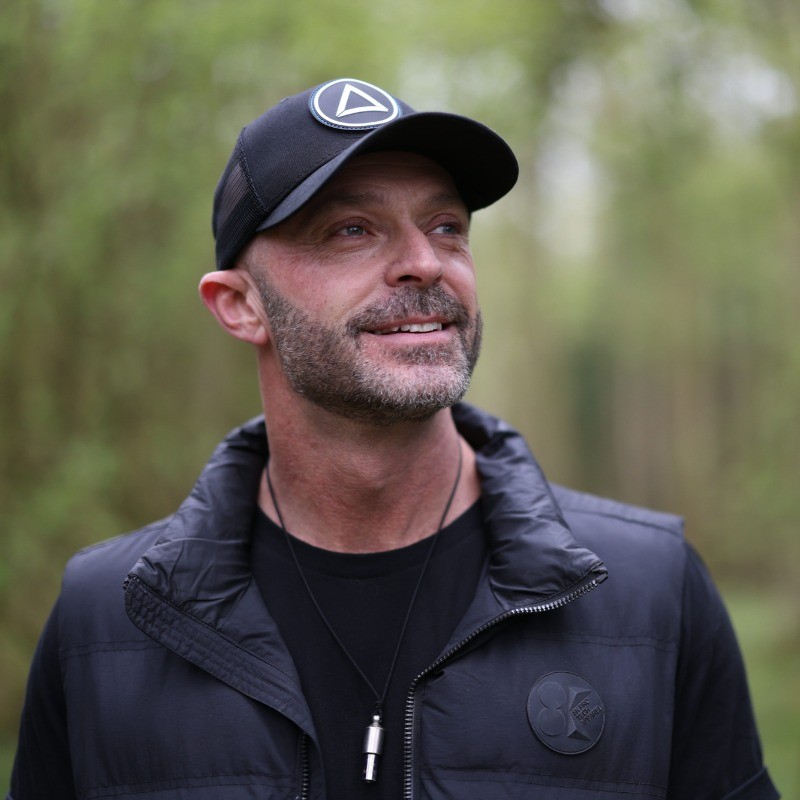
Ross Tomkins
Founder of Balmoral Partners & Alphagenix | Guiding Business Owners to Scale, Exit, and Transform | 20+ Acquisitions Across Seven Verticals
Ross Tomkins builds authority in founder health and business fundamentals by mixing personal narrative with contrarian takes on shortcuts, optimization, and lifestyle design. His most distinctive move is the pattern-interrupt hook that poses a question or states a paradox, then resolves it with a counterintuitive insight backed by social proof or lived experience.
5.7/wk
74 posts in 30d
89
avg per post
20.4%
comments / total
0.9%
reposts / total
story
Fri · 11 AM CET
Voice & tone
Direct, unapologetic, and grounded in first-person credibility. He speaks like someone who has built and failed and learned, not someone selling theory. The tone is conversational but structured, with short declarative sentences that feel like advice from a peer. Phrases like 'Turns out, fundamentals are still fundamentals' and 'I got in my own way' signal vulnerability paired with hard-won wisdom.
Signature phrases
- “Turns out, fundamentals are still fundamentals.”
- “I got in my own way.”
- “It's a numbers game.”
- “You can have the best team. The best systems. The best strategy. But if you're running on empty, none of it holds.”
- “That's not selfish. That's structural.”
- “So what's the answer?”
Top 3 posts, dissected
Their highest-engagement posts, broken down line by line. Steal the structure.
Why are so many business owners suddenly obsessed with prioritising their health? Jeff Bezos got jacked at 61. Mark Cuban lost 15 pounds at 65. Mark Zuckerberg is training every day for MMA at 40. These are some of the smartest business minds on the planet. And they’ve all come to the same conclusion: Your body is the most important business asset you own. You see, founder culture has always celebrated the grind. The 100-hour weeks. The skipped holidays. The 4-hour sleep mentality. But in the long run, this is exactly why you experience brain fog, mood swings and have no energy for the very business you worked so hard to build. So what’s the answer? You don’t need to train MMA or transform your body overnight. Start with just giving yourself an hour. Lift. Walk. Because the founders who are still growing and still building don’t just work harder. They protect the one thing everything else depends on. Themselves.
The question 'Why are so many business owners suddenly obsessed with prioritising their health?' stops the scroll because it signals a trend the reader may have noticed but not named. It's specific to the audience (business owners) and creates immediate pattern recognition.
Opens with a question, stacks three celebrity examples with ages and specific actions, states the insight ('Your body is the most important business asset you own'), pivots to the problem (founder culture celebrates the grind), lists the costs (brain fog, mood swings, no energy), poses a solution question ('So what's the answer?'), gives a minimal action step (lift, walk, give yourself an hour), and closes with a reframe about protection.
- Stacking social proof - three names, three ages, three specific actions create pattern recognition
- Short declarative sentences - 'These are some of the smartest business minds on the planet' lands harder than a longer clause
- Problem-before-solution - names the grind culture before offering the antidote
- Minimal viable action - 'Start with just giving yourself an hour' feels achievable, not preachy
- Reframe at close - shifts from 'you need to exercise' to 'you need to protect the one thing everything else depends on'
No explicit CTA, but the post ends with a reframe that makes the reader feel like they're protecting something sacred. This drives comments because readers want to share their own health commitments or ask how to start.
Use social proof stacking to make abstract claims feel inevitable, then give one small action step that feels doable, not overwhelming.
The Enhanced Games just ran their first event in Las Vegas. Every drug allowed. No limits on equipment. Zero restrictions. Most people expected world records to fall like dominoes. They didn't. Only one performance cracked a world record. Kristian Gkolomeev won the 50m frees…
The hook 'The Enhanced Games just ran their first event in Las Vegas' works because it's timely and specific enough to feel newsworthy, but vague enough to create curiosity about what the post will actually argue.
Opens with a news peg, states the extreme conditions (every drug allowed, no limits, zero restrictions), sets up an expectation (world records will fall), reveals the reality (only one record fell, and barely), uses that paradox to pivot to the real insight (shortcuts don't replace fundamentals), admits personal use of optimization tools (TRT, peptides), and closes with the reframe that 'fundamentals are still fundamentals.'
- Paradox setup and resolution - creates cognitive tension that pulls the reader through
- Specific data point - '0.07 seconds faster' makes the near-miss feel real and measurable
- Personal credibility admission - 'I've spent years personally using TRT, peptides, and regenerative medicine' shows the author isn't anti-optimization, just pro-fundamentals
- Repetition for emphasis - 'Fundamentals are still fundamentals' echoes the title and makes it quotable
- Contrarian positioning - acknowledges the reader's bias toward shortcuts, then gently challenges it
No explicit CTA. The post closes with a statement that invites disagreement or reflection: 'And that's the part most people still don't want to accept.' This drives comments because readers want to defend their own optimization choices or agree with the insight.
Use a real-world event or data point to set up an expectation, then reveal a paradox that contradicts it. This structure makes your insight feel earned, not preachy.
Year 1 in M&A: 0 deals Year 2 in M&A: 0 deals Year 3 in M&A: 1 deal Year 10 in M&A: 25+ acquisitions with 4 successful exits Why did it take me 2 years to complete a single deal? You might guess it was money or maybe I just didn’t have enough experience. But really… it was me …
The hook 'Year 1 in M&A: 0 deals' works because it's a timeline that immediately signals struggle and invites the question 'why?' The specificity of the numbers (0, 0, 1, 25+) creates a visual pattern that feels like a story waiting to be told.
Opens with a timeline of failure, poses a question about the cause, lists the reader's likely guesses (money, experience), reveals the real cause (self-doubt and perfectionism), lists the specific fears, pivots to the realization (it's a numbers game), restates the insight as a process (conversations lead to opportunities lead to offers), shares the result (9 deals last year), and closes with advice to take action despite uncertainty.
- Timeline progression - shows growth arc visually, making the turnaround feel earned
- Honest self-diagnosis - 'I got in my own way' is vulnerable and relatable
- Fear inventory - lists specific worries (overpay, hidden accounts, offend the owner) to show the reader their own fears reflected back
- Process reframe - breaks M&A into a simple funnel (conversations > opportunities > offers > deals) to demystify it
- Quantified result - '9 deals last year' proves the method works, not just theoretically
- Direct advice close - 'Go have the conversations' is actionable and removes the excuse of waiting for certainty
The close is implicit action advice: 'Go have the conversations. Reach out to people. Make the offer, even if you're not 100% sure.' This drives comments because readers want to share their own hesitations or ask for permission to start.
Share a personal failure timeline, admit the real cause (usually internal), then reframe the solution as a simple repeatable process that removes the need for perfection.
What drives their engagement
Ross's posts end with implicit permission-giving or open questions that invite readers to share their own experience. Phrases like 'So I'm curious do you holiday as a full family every time' and 'Go have the conversations' make readers feel like they're part of a conversation, not receiving a lecture. The comment rate of 20.4% is high because his posts validate unconventional choices and ask readers to reflect on their own.
Reposts are low (0.9%) because his content is highly personal and specific to founder/business owner experience. Posts that get reposted tend to be the ones with the most universal insight (like the health post with 4 reposts), but most of his content is too tied to his specific journey to feel broadly shareable.
Content pillars
Founder Health and Energy
35%Teaches business owners that physical health is a business asset, not a luxury, using examples of high-profile founders and the cost of burnout.
Fundamentals Over Shortcuts
25%Challenges the obsession with optimization and hacks by proving that genetics, consistency, and decades of work still outperform quick fixes.
Action Over Perfection
20%Shares personal M&A and business stories to argue that starting imperfectly and iterating beats waiting for certainty.
Relationship and Life Design
20%Normalizes unconventional choices like solo parenting trips and couple-only holidays as structural investments in the foundation of family and business.
Hook patterns
Celebrity Proof Stack
[Name] did [specific action] at [age]. [Name] did [action] at [age]. [Name] is [action] at [age]. These are [credibility claim]. And they've all come to the same conclusion: [insight].
“Jeff Bezos got jacked at 61. Mark Cuban lost 15 pounds at 65. Mark Zuckerberg is training every day for MMA at 40. These are some of the smartest business minds on the planet. And they've all come to the same conclusion: Your body is the most important business asset you own.”
→ Stacks social proof from recognizable figures to make an abstract claim (health matters) feel inevitable and urgent.
Paradox Resolution
[Expectation]. [Reality that contradicts it]. That tells us something important. [Reframe].
“Most people expected world records to fall like dominoes. They didn't. Only one performance cracked a world record. That tells us something important. Not about drugs. About the fundamentals.”
→ Creates cognitive tension that demands resolution, pulling readers through to the insight.
Timeline Reveal
Year [X] in [domain]: [result]. Year [Y]: [result]. Year [Z]: [result]. Why did it take so long? [Honest admission]. Until I realised [shift].
“Year 1 in M&A: 0 deals. Year 2 in M&A: 0 deals. Year 3 in M&A: 1 deal. Year 10 in M&A: 25+ acquisitions with 4 successful exits. Why did it take me 2 years to complete a single deal?”
→ Builds credibility through transparency about struggle, then pivots to the breakthrough moment.
Contrasting Lists
It's easy to say you don't have time for [list of positive actions]. But if you keep saying that, you're probably going to have to make time for [list of negative consequences].
“It's easy to say you don't have time to: Play a sport, Go swimming, Go to the gym... But if you keep saying you don't have time for those things, you're probably going to have to make time for: Colds, Coughs, Cardiovascular issues...”
→ The visual contrast between two lists makes the cost of inaction visceral and memorable.
Uncomfortable Truth Opener
We've done something for [timeframe] that still makes some people uncomfortable. [Specific behavior]. [Why it matters structurally].
“We've done something for 18 years that still makes some people uncomfortable. We go on holiday without the kids. Team Tomkins has always operated on one belief: the relationship that created the family deserves the same investment as the family itself.”
→ Signals that the post will challenge conventional wisdom, attracting readers who want permission to think differently.
Question Hook with Social Proof
Why are so many [group] suddenly [behavior]? [Social proof examples]. And they've all come to the same conclusion: [insight].
“Why are so many business owners suddenly obsessed with prioritising their health?”
→ Opens with curiosity, then validates the curiosity with recognizable names, making the reader feel part of a trend.
Top-performing hooks
“Why are so many business owners suddenly obsessed with prioritising their health?”
→ The post leverages high-profile founder examples to establish credibility while reframing health as a business asset rather than a luxury, making it resonate with ambitious entrepreneurs who value eff
“The Enhanced Games just ran their first event in Las Vegas.”
“Year 1 in M&A: 0 deals”
“If you don’t make time for exercise, you’ll eventually have to make time for illness.”
→ The post uses a powerful contrarian premise (exercise vs. illness) that resonates with busy founders, then strategically positions the author's community as the solution, creating urgency and relevanc
“We’ve done something for 18 years that still makes some people uncomfortable.”
“Sylvester Stallone is 79 years old.”
“I made £12,000 in my first year of business.”
““I don’t have time for the gym.””
“Hard: Leaving work early for your kid’s birthday.”
“9 years ago I had no idea how to complete a single acquisition.”
What works
- Social proof stacking with ages and specific actions (Bezos at 61, Cuban at 65, Zuckerberg at 40) drives 395 engagement on the top post. The pattern works because it makes an abstract claim feel inevitable by showing multiple credible examples.
- Paradox setup and resolution (world records expected to fall, only one fell slightly) creates cognitive tension that pulls readers through. The top 2 post uses this and achieves 339 engagement.
- Timeline reveals of personal struggle (Year 1: 0 deals, Year 10: 25+ acquisitions) build credibility through transparency. Post 3 uses this and hits 327 engagement, proving readers trust struggle narratives more than success stories.
- Contrasting lists (easy things to skip vs. consequences you'll face) make the cost of inaction visceral. Post 4 uses this structure and achieves 240 engagement with a high comment rate (21 comments), suggesting readers want to debate or share their own trade-offs.
- Ending with implicit permission or open questions (not explicit CTAs) drives the 20.4% conversation rate. Posts that close with 'So I'm curious...' or 'Go have the conversations' invite reflection rather than action, which generates more comments than traditional CTAs.
Steal this for your own LinkedIn
- Start your next post with a timeline of your own failure or struggle (Year 1: X, Year 3: Y, Year 10: Z), then reveal the internal shift that changed everything. This structure works because it's specific to your experience and feels earned.
- Use contrasting lists to make the cost of inaction visible. Instead of saying 'exercise is important,' list what you'll skip (gym, walks, sports) versus what you'll face (colds, hospital visits, brain fog). The visual contrast is more persuasive than argument.
- End with an open question or implicit permission, not a hard CTA. Try 'So I'm curious, do you...' or 'Go have the conversation' instead of 'Comment below' or 'DM me.' This invites reflection and drives comments.
- Stack social proof with specific ages and actions, not just names. Instead of 'Successful people prioritize health,' write 'Bezos got jacked at 61. Cuban lost 15 pounds at 65.' The specificity makes the claim feel inevitable.
- Admit your personal use of the thing you're cautioning against (TRT, peptides, optimization tools). This builds trust because you're not preaching from a position of purity. Say 'I've used X, and here's what I learned' instead of 'X is bad.'
- Close with a reframe that shifts the reader's perspective on the problem. Instead of ending with the problem, end with why it matters structurally. Example: shift from 'you need to exercise' to 'you need to protect the one thing everything else depends on.'
Compare Ross with…

Get the full Ross Tomkins playbook
Hook templates, content calendar, posting cadence, and the exact frameworks they use - delivered to your inbox.
Posting patterns
Posts 5.7 times per week with extreme consistency (74 posts in 74 days), suggesting a disciplined content system rather than sporadic inspiration.
Friday at 10 UTC performs best, suggesting his audience checks LinkedIn on Friday mornings, likely before the weekend when they're thinking about life balance and personal priorities.
Long-form posts (180-350 words) perform best with 99 average engagement, followed closely by medium (80-180 words) at 91 engagement. This suggests his audience wants enough detail to feel substantive but not so much that it requires a second read. Very long posts (350+ words) underperform at 63 engagement, indicating a ceiling around 300 words for optimal performance.
Engagement by day
Content mix
avg 59 engagements per post
Ross's mix of 47% long-form and 41% medium-form posts works because his audience (founders and business owners) has enough attention span for substance but values efficiency. The 9% story format underperforms (59 avg engagement) because his audience doesn't want narrative fluff; they want narrative with a business or life lesson embedded. His consistency (5.7 posts per week) works because it keeps him top-of-mind without overwhelming the feed, and the Friday timing catches people in a reflective mood about life balance.